

ProductsPVC Bored Piers
PVC Bored Piers — Formwork for Foundations & Deep Piling
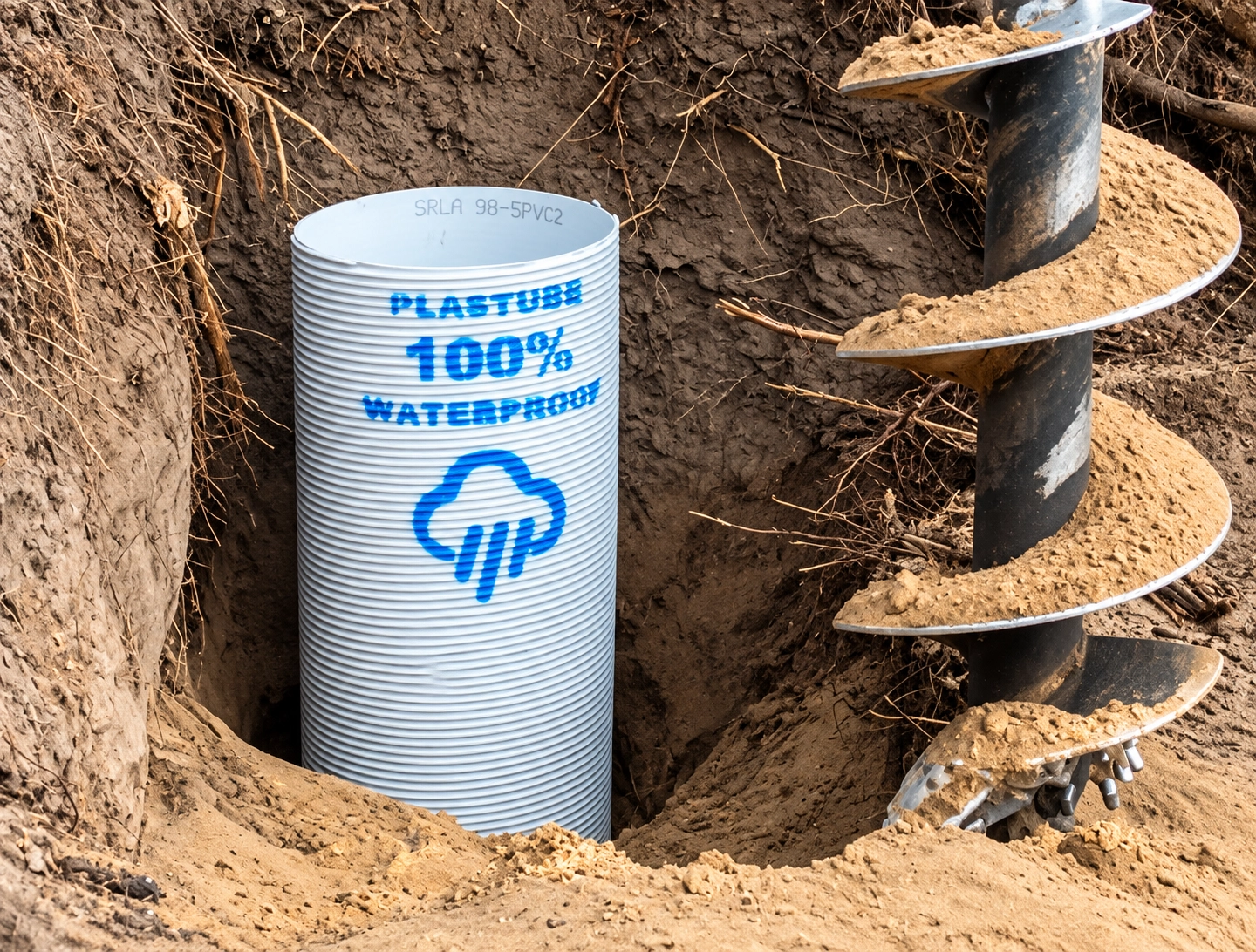
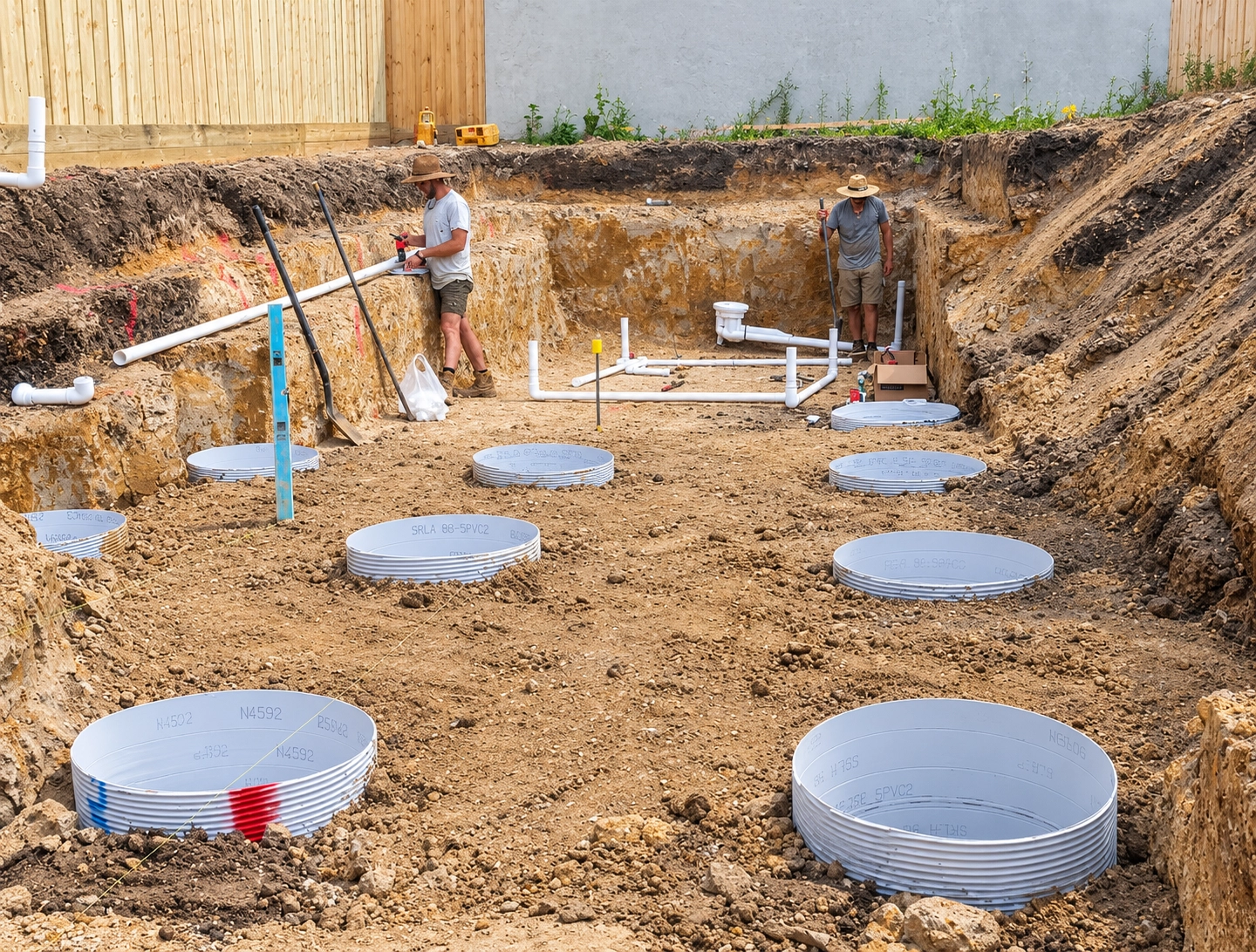
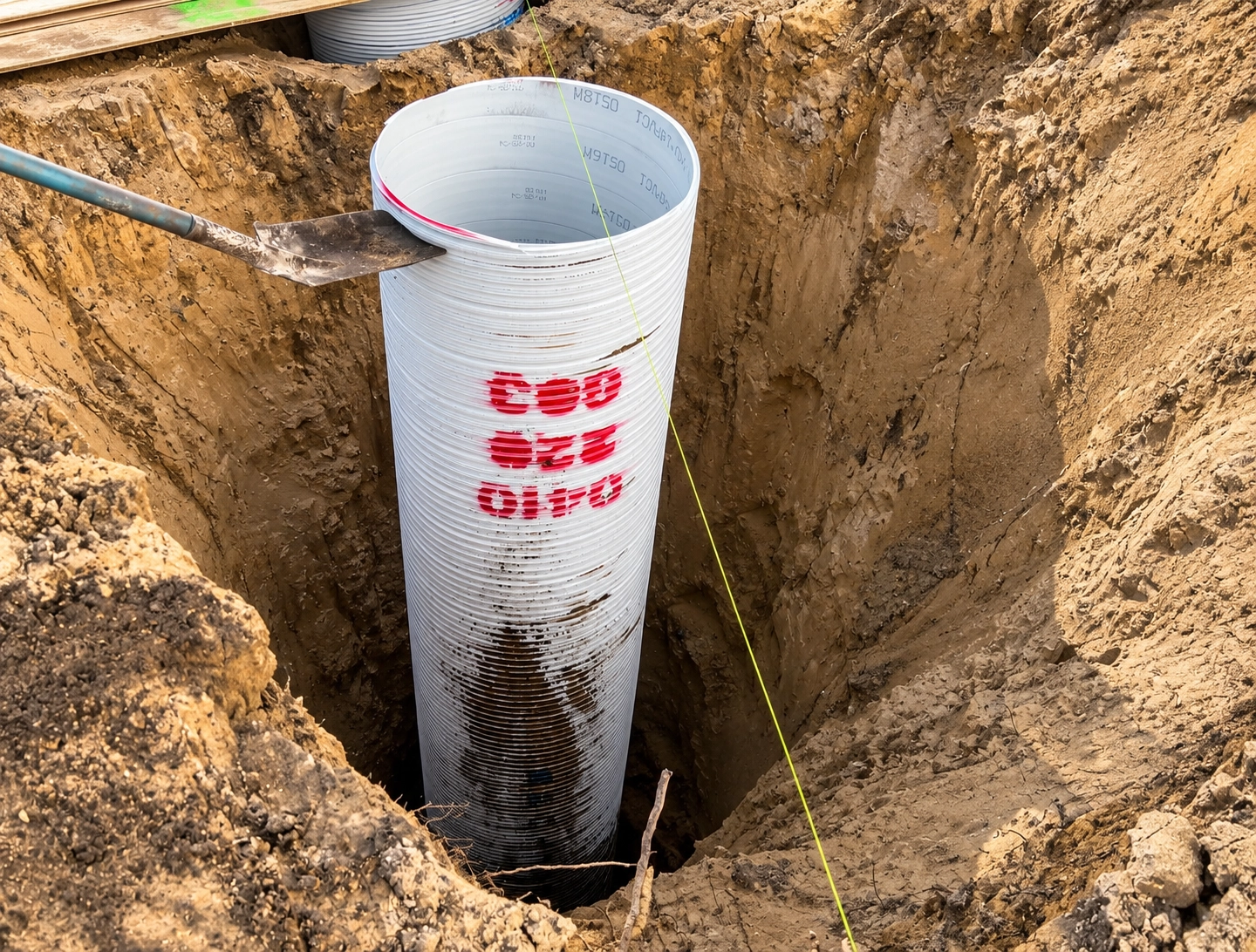
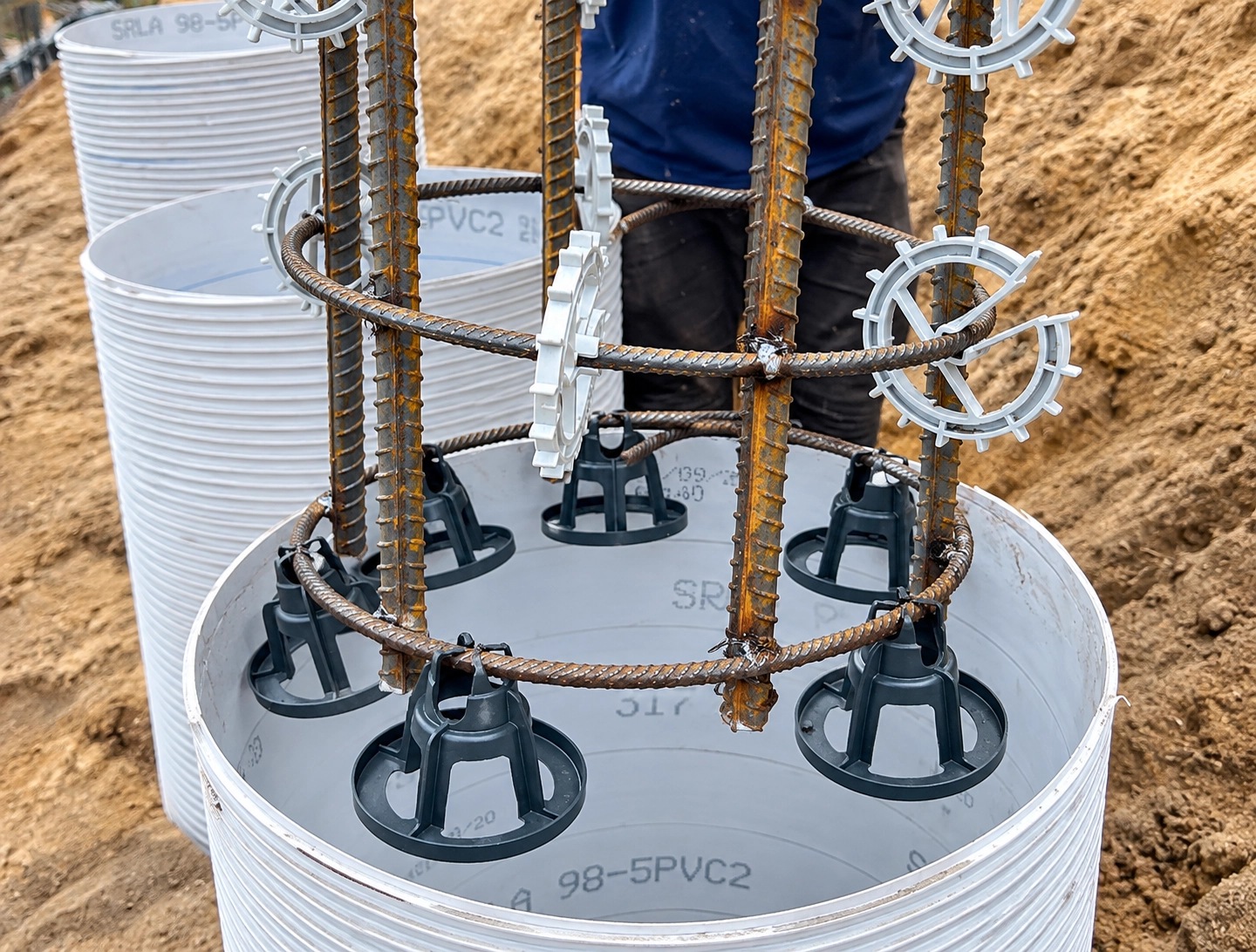
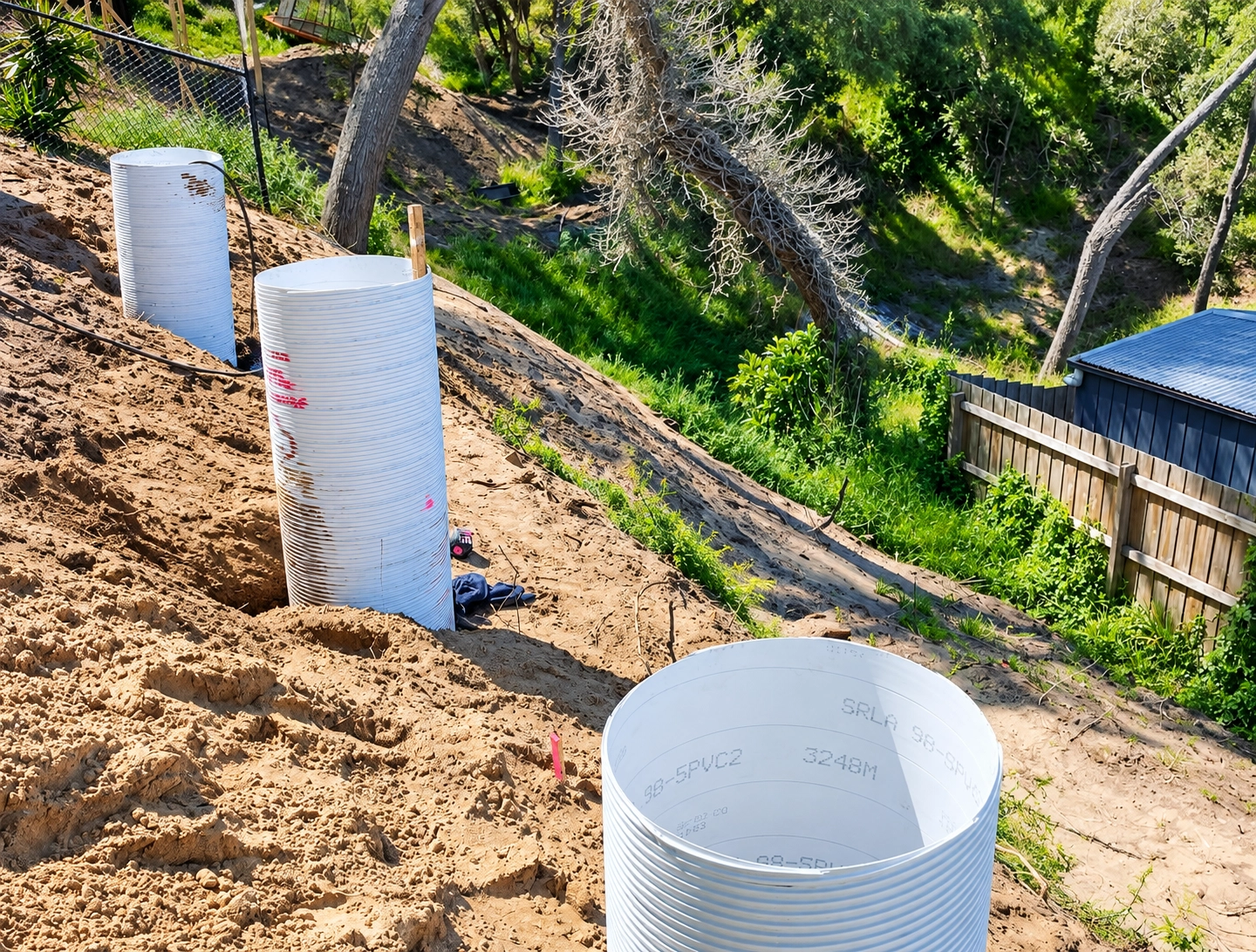
PVC bored pier formwork lines and forms bored holes for foundations, footings, and piling, particularly where reactive clay, unstable ground, or groundwater conditions make an unlined bore unreliable. It provides a clean, consistent, waterproof surface for the pour and can act as a permanent or removable liner depending on ground conditions.


Product FeaturesWhy Use PVC Bored Pier Formwork

Waterproof Lining
Keeps the pour clean in wet or unstable bores

Lightweight and Easy to Lower Into the Bore
No heavy lifting equipment required for smaller diameters

Made to Measure
The exact bore diameter and pier depth specified by your geotechnical or structural engineer

Durable in Ground
Resists collapse and deformation from surrounding soil pressure during and after the pour

Reduces Rework
A consistent bore lining reduces the risk of concrete loss into surrounding voids or soft ground

Product UsesCommon Applications
-
Residential and commercial footing systems in reactive clay soils
-
Deep pile foundations for structural columns
-
Retaining wall and boundary pier footings
-
Civil and infrastructure piling where groundwater or unstable ground is present
FAQFrequently Asked Questions
What is PVC bored pier formwork used for?
PVC bored pier formwork lines a bored hole before a concrete pour, keeping the pour clean and consistent in reactive clay, unstable ground, or where groundwater is present.
Is PVC bored pier formwork left in the ground permanently?
It can be used either as a permanent liner or removed after the pour, depending on ground conditions and your engineer’s specification.
What diameters are available for bored pier formwork?
Bored pier formwork is manufactured to the exact bore diameter specified by your geotechnical or structural engineer, rather than fixed stock sizes.
Why line a bored pier instead of pouring directly into the hole?
Lining the bore prevents concrete loss into soft or unstable surrounding soil, keeps groundwater from compromising the pour, and produces a consistent pier diameter along its full depth.